Menu

Sound Creativity: How to Compose Original Music Using Elements from Everyday Life

Discover how to harness everyday sounds from urban and natural environments to inspire original music compositions. By immersing in local auditory experiences, musicians can create unique pieces that reflect cultural narratives, bridge traditional and modern styles, and resonate emotionally with their audiences. Embrace sound creativity to craft musical masterpieces from daily life.

The Relationship Between Oral Literature and Artistic Expression in Nigerian Communities

Nigerian oral literature serves as a cultural cornerstone, influencing artistic expression across music, theatre, and visual arts. This dynamic relationship fosters community identity while preserving rich narratives, ensuring that traditional stories evolve and resonate with contemporary audiences, thus highlighting the importance of storytelling in Nigeria's cultural landscape.

The Evolution of Nigerian Literature as Reflection of Contemporary Society

Nigerian literature has evolved into a rich tapestry reflecting contemporary society's complexities, addressing themes like identity, gender equality, and socio-political issues. Through diverse voices and digital platforms, it fosters cultural dialogue, advocates for change, and captures the resilience of a nation navigating tradition and modernity.

The Importance of Community Musical Activities in Promoting Social Cohesion in Nigeria

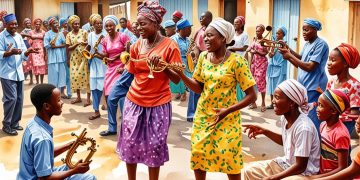
Community musical activities in Nigeria play a crucial role in promoting social cohesion by bridging cultural and generational divides. These events foster connections, encourage collaboration, and enhance community spirit, ultimately serving as powerful tools for unity, cultural exchange, and social advocacy in a diverse nation.

Graffiti and Urban Art in Nigeria: Voices of Youth and Social Change

Graffiti and urban art in Nigeria have emerged as vibrant expressions of youth voices, addressing social change through political commentary, cultural identity, and community empowerment. These art forms not only reflect the realities of societal challenges but also spark global conversations and foster a sense of collective identity among Nigeria's youth.

Nigerian Traditional Crafts: Preservation and Innovation in the 21st Century

Nigerian traditional crafts showcase a vibrant blend of preservation and innovation, adapting to modern influences while honoring cultural heritage. Artisans are leveraging digital platforms and sustainable practices to revive interest in crafts like textiles, pottery, and woodwork, ensuring their significance remains relevant in the 21st century.

Music as a Form of Personal Expression: Stories of Young Nigerian Artists

Music in Nigeria serves as a powerful form of personal expression for young artists, intertwining their unique stories with broader social narratives. Through diverse genres, they address critical issues while celebrating cultural heritage, fostering community, and shaping a global dialogue about identity, resilience, and creativity.

The Influence of Traditional Nigerian Music on Modern Musical Activities

Traditional Nigerian music profoundly influences modern musical activities, blending rich cultural heritage with contemporary genres. Instruments, rhythmic patterns, and storytelling themes permeate new sounds like Afrobeats, fostering a vibrant global exchange. This ongoing fusion preserves cultural identity while inspiring innovative creations among today's artists.

Music as a Tool for Empowerment: Stories of Nigerian Women Transforming Their Communities Through Musical Art

Nigerian women are transforming their communities through music, using it as a powerful tool for empowerment and social change. They address critical issues like gender inequality and societal injustices, fostering unity and economic opportunities while inspiring collective action and advocacy among marginalized voices in their culture.

Art as a Form of Protest: Analysis of Works by Contemporary Nigerian Artists

Contemporary Nigerian artists leverage their art as a potent form of protest, addressing critical issues like corruption, human rights, and identity. Through diverse mediums, their works foster dialogue, challenge societal norms, and inspire social change, highlighting art's vital role in advocating for justice and reshaping cultural narratives in Nigeria.