

Why Virtual Reality Is Reshaping the American Classroom
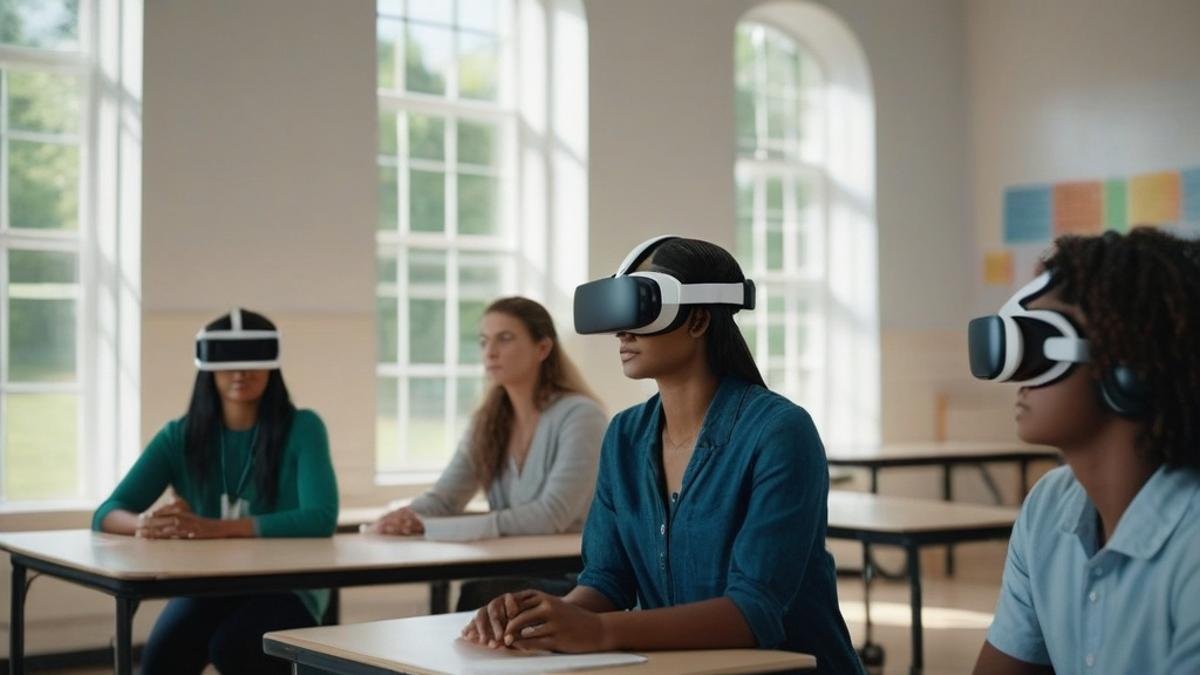
Picture a high school biology class in Ohio dissecting a virtual frog, or students in Texas walking through ancient Rome without ever leaving their desks. This isn’t science fiction anymore — it’s the growing reality of Virtual Reality in education. With advancements in technology, students now have the opportunity to dive into experiences that textbooks simply cannot replicate.
Schools across the United States are increasingly integrating Virtual Reality in classroom settings, and the results are turning heads. A 2023 report by PwC found that VR learners completed training four times faster than classroom learners, indicating that immersive technology is not just a novelty; it is a powerful educational tool. As students engage with virtual environments, they also develop critical thinking skills and problem-solving abilities in ways that traditional methods often overlook.
What Makes VR Classroom Technology So Compelling?
Traditional teaching methods often struggle to hold student attention in a world full of digital distractions. Enhancing student engagement requires tools that feel as immersive as the games and apps students already love. Here’s what educators are discovering about interactive learning with VR:
- Students retain information up to 75% better when learning through immersive experiences, as their engagement allows for deeper cognitive processing.
- Complex concepts in chemistry, physics, and anatomy become tangible through 3D simulations, giving learners visual and practical understanding. For example, students can explore the molecular structure of compounds interactively, enabling a better grasp of abstract concepts.
- Field trips to the Great Barrier Reef or the Moon happen without leaving school grounds. Such virtual excursions provide access to experiences that may be logistically or financially prohibitive in real life.
- Students with different learning styles benefit from multisensory instruction, as VR experiences can integrate graphics, sounds, and tactile elements, catering to visual, auditory, and kinesthetic learners alike.
A Growing Trend Worth Watching
Districts from California to New York are piloting VR programs, signaling a broader shift in how classrooms operate. The benefits of VR in teaching extend beyond novelty; they touch on retention, accessibility, and motivation. Moreover, studies show that VR can help to close learning gaps, providing differentiated instruction tailored to each student’s needs.
What exactly is driving this shift, and how are teachers implementing it effectively? The integration of VR technology is often met with a blend of excitement and challenges. Some educators report initial concerns about the costs and technical training required, but many have found that the short-term investment leads to long-term gains in student achievement and enthusiasm. Schools are increasingly partnering with tech companies to create curriculum-aligned VR content, ensuring that the technology complements educational goals.
The answers to these questions reveal surprising insights into the future of American education, suggesting a transformation that could redefine learning environments and methodologies. As VR continues to evolve, its potential to create inclusive, dynamic, and engaging educational experiences is becoming clearer, positioning it as a cornerstone of 21st-century learning.
SEE ALSO: The Role of Artificial Intelligence in Personalized Learning Experiences
From Pilot Programs to Everyday Practice: How Schools Are Making VR Work
Behind every successful VR lesson lies a logistical puzzle that administrators and teachers are learning to solve. Integrating Virtual Reality in classroom environments requires more than just purchasing headsets — it demands thoughtful planning, staff training, and a clear understanding of curriculum alignment. Schools that have cracked this code are seeing measurable results.
The Practical Steps Districts Are Taking
Across the country, school districts are following a similar roadmap to introduce VR classroom technology without overwhelming budgets or staff. Common strategies include:
- Starting with shared VR carts that rotate between classrooms, allowing multiple teachers to test interactive learning with VR before committing to a full-scale rollout.
- Partnering with educational technology companies like ClassVR, zSpace, or Google Expeditions to access ready-made, standards-aligned content instead of building lessons from scratch.
- Offering professional development sessions where teachers experience VR as students first, helping them understand its classroom potential firsthand.
- Piloting programs in a single grade or subject — often science or history — before expanding district-wide based on feedback and performance data.
Florida’s Orange County Public Schools, for instance, launched a VR pilot in select middle schools focusing on Earth science. Teachers reported that students who once struggled to visualize plate tectonics could suddenly manipulate 3D models of the Earth’s crust, leading to noticeably higher quiz scores within a single semester.
Why Teacher Buy-In Matters More Than the Technology Itself
Interestingly, the success of Virtual Reality in education often hinges less on the hardware and more on how comfortable educators feel using it. A Stanford University study on classroom technology adoption found that teachers who received at least six hours of hands-on VR training were three times more likely to integrate it consistently into weekly lessons.
This finding underscores a critical point: enhancing student engagement through VR isn’t just about flashy headsets. It’s about equipping educators with the confidence and skills to weave immersive experiences into everyday teaching without disrupting lesson flow.
Some districts have responded by creating “VR champion” roles — designated teachers who receive advanced training and then mentor colleagues. This peer-to-peer model has proven especially effective in rural school systems, where access to formal tech support may be limited.
The benefits of VR in teaching become most apparent when technology and pedagogy align seamlessly. Rather than replacing traditional instruction, VR is increasingly used to supplement lessons at key moments — introducing a new unit, reinforcing a difficult concept, or providing a memorable review before exams. This blended approach keeps immersive tools purposeful rather than gimmicky, ensuring that every headset session serves a clear educational goal.
| Key Aspect | Description & Benefits |
|---|---|
| Immersive Learning Experiences | VR technology transports students into realistic environments, providing hands-on learning experiences that are otherwise difficult to achieve. This enhances student engagement and retention of information. |
| Interactive Simulations | Integrating Virtual Reality in Classroom settings allows for interactive simulations, such as virtual labs for science experiments or historical reconstructions. These activities promote active learning and critical thinking. |
| Accessible Learning | VR can cater to various learning styles by offering visual and kinesthetic experiences, making education more inclusive. This accessibility helps to eliminate barriers for students with different needs. |
| Collaboration & Communication | Engaging in VR environments improves collaboration among students. Group projects in VR settings encourage communication skills as learners work together to solve problems in an immersive setting. |
DISCOVER MORE: Click here to learn about assessment-driven curriculum development
Measuring Impact: What the Data Reveals About VR’s Classroom Value
Enthusiasm for immersive technology is one thing; hard evidence is another. As more schools invest in Integrating Virtual Reality in classroom settings, researchers and administrators are digging into the numbers to see whether the hype translates into real academic gains. As educational institutions examine how VR can reshape traditional learning environments, they are also unearthing beneficial data that could redefine teaching methods across the board.
What the Research Actually Shows
A compelling study by PwC in 2023 examined VR’s role in corporate training environments, revealing that learners using immersive tools were able to complete coursework up to four times faster than their peers in conventional classrooms. Furthermore, participants reported a significantly higher confidence in applying what they had learned. Though primarily focused on corporate education, these insights resonate loudly within K-12 settings, where educators have observed similar trends across various subjects, including anatomy, chemistry, and geography.
Complementing this, the University of Maryland’s Human-Computer Interaction Lab conducted research on memory retention, comparing traditional text-based learning with immersive VR experiences. The results were notable: participants engaged with VR content recalled approximately 8.8 percent more information than those who relied solely on textbooks. Researchers attributed this increase to spatial memory cues inherent in immersive environments, which help students to retain information more effectively.
These comprehensive findings underscore a paradigm shift in educational technology discussions; Virtual Reality in education is increasingly supported by measurable cognitive benefits, thereby transcending mere novelty or trendiness. Schools that have adopted VR are beginning to witness real improvements in learning outcomes and retention rates, which could set a new standard for effective teaching methods.
Engagement Metrics That Go Beyond Test Scores
Test scores tell only part of the story. Increasingly, educational districts are investigating softer engagement indicators to evaluate VR classroom technology. Some of these metrics include:
- Attendance rates on days when VR lessons are scheduled compared to standard instructional days, often showing higher turnout.
- Student-reported enthusiasm through post-lesson surveys, frequently revealing double-digit increases in self-rated interest levels.
- Classroom participation, notably among students usually quiet during lecture-based instruction, highlighting a shift towards more active involvement.
- A reduction in disciplinary incidents during immersive learning sessions noted by several middle school administrators in states like Texas and Ohio.
For instance, one Ohio-based school reported that special education students, individuals who frequently grapple with traditional sensory input in busy classrooms, displayed enhanced focus during controlled VR sessions tailored to their individualized learning plans. This suggests that VR is not just an engaging tool for advanced students; enhancing student engagement appears to create equitable opportunities for learners who often struggle with conventional teaching formats, including English language learners and those with attention-related learning differences.
Experts, however, urge caution against perceiving VR as a one-size-fits-all solution. The benefits of VR in teaching shine brightest when integrated with clear learning objectives and regular assessment measures. This emphasis on sound instructional design serves as a vital reminder: even the most advanced classroom technology, including VR, succeeds best when it is implemented thoughtfully rather than simply touted for its novelty. Educators are encouraged to explore the diverse ways in which immersive experiences can support their pedagogical goals, ensuring that the technology acts as a facilitator of learning rather than a replacement for traditional methods.
DISCOVER MORE: Click here to dive deeper into gamification
The Road Ahead for Immersive Learning
The evidence gathered from classrooms across the country tells a consistent story. Integrating Virtual Reality in Classroom environments does more than capture attention for a few novel minutes; it reshapes how students absorb, retain, and apply knowledge. From faster coursework completion to measurable gains in memory recall, the data suggests this technology has moved well beyond gimmick status.
Still, the numbers only tell part of the picture. Behind every statistic sits a classroom in Ohio, Texas, or California where a teacher decided that a headset might reach a student that a textbook never could. That human element, the willingness to experiment with VR classroom technology, remains just as important as the technology itself.
What Schools Should Consider Next
As districts weigh whether to expand their programs, a few questions deserve attention:
- Does the school have a clear instructional goal for each VR lesson, rather than using it purely for novelty?
- Are teachers receiving adequate training to pair interactive learning with VR alongside traditional instruction?
- Is there a plan to track engagement and academic outcomes over time, not just after a single pilot semester?
- Can the technology be made accessible to students with different learning needs and financial backgrounds?
These questions matter because the benefits of VR in teaching depend heavily on execution. A headset without purpose is just another screen; a headset paired with thoughtful curriculum design becomes a genuine bridge to deeper understanding.
Looking forward, Virtual Reality in education seems poised to grow from experimental pilot programs into a standard part of the instructional toolkit. As costs decrease and content libraries expand, more schools will likely test the waters. Whether this shift becomes a lasting transformation or a passing trend depends largely on how educators approach the next chapter. What seems clear already, though, is that enhancing student engagement through immersive tools is no longer a distant possibility. It is happening now, one classroom at a time.
Frequently Asked Questions
What are some effective ways to integrate virtual reality in classroom settings?
Effective methods to integrate virtual reality in classrooms include using VR simulations for science experiments, virtual field trips to historical sites, and immersive storytelling experiences in literature. Teachers can also incorporate VR into lessons to visualize complex concepts, making learning more interactive and engaging.
How does integrating virtual reality enhance student engagement in the classroom?
Integrating virtual reality enhances student engagement by providing immersive, hands-on learning experiences that foster curiosity. Students are more likely to participate actively when they can explore virtual environments and interact with digital content, leading to better retention of information.
What challenges do educators face when implementing virtual reality in the classroom?
Educators may encounter challenges such as high costs of VR equipment, the need for adequate technical support, and ensuring that the VR content aligns with curriculum standards. Additionally, some teachers may require training to effectively incorporate VR into their teaching strategies.
Are there specific age groups that benefit more from virtual reality integration in the classroom?
While students of all ages can benefit from virtual reality, younger students often find VR particularly engaging due to its interactive nature. However, high school students can also benefit greatly, especially when exploring complex subjects like anatomy or physics, as VR allows for deeper understanding through visual and hands-on simulations.
How can teachers assess the learning outcomes of students using virtual reality in lessons?
Teachers can assess learning outcomes through various methods such as quizzes and reflective journals after VR experiences, observing student interactions during VR activities, and comparing performance metrics before and after VR integration. This multifaceted approach helps in evaluating the effectiveness of VR in enhancing understanding and retention of subject matter.