

Why Classrooms Need a New Playbook
Walk into any American classroom today, and you’ll notice something striking: attention spans are shrinking while distractions multiply. Teachers nationwide are searching for student engagement techniques that actually work in this new reality. The stakes are high, especially when research shows engaged students score up to 30% higher on standardized assessments. This connection between engagement and academic success highlights the urgency of adapting teaching methods to meet contemporary challenges.
Boredom and disconnection remain silent classroom killers. According to Gallup polls, only 34% of U.S. students report feeling engaged in school by high school. This alarming statistic reflects a growing trend of disengagement among students that demands attention—and action. As educators face increasing challenges from competing technologies and the pressures of a fast-paced world, they need targeted strategies to reignite a love of learning.
What This Article Will Explore
This piece dives into proven methods to maximize student participation without overwhelming educators or learners. Expect practical, classroom-tested strategies rather than vague theory. Here are some key areas we will cover:
- Active learning strategies that transform passive listeners into engaged participants, such as think-pair-share exercises and project-based learning.
- Effective learning resources, from digital tools like Kahoot and Quizlet to low-tech classroom hacks including interactive whiteboards and group activities utilizing simple materials.
- Methods for enhancing classroom interaction across diverse learning styles, ensuring that kinesthetic, auditory, and visual learners all have opportunities to thrive.
- Data-backed student engagement strategies used in top-performing schools, including personalized learning plans and regular feedback mechanisms that keep students invested in their learning journey.
A Shift Worth Making
The good news? Small changes often yield significant results. Educators who adopt targeted engagement techniques report noticeable improvements within weeks, not months. For instance, implementing short, interactive segment breaks during lectures can significantly boost attention spans, allowing students to refocus and contribute actively.
What follows is a roadmap—grounded in research, real classroom examples, and actionable steps. Whether you’re a veteran teacher or new to the profession, there’s something here worth testing tomorrow morning. By exploring innovative techniques and fostering a collaborative environment, we can shift the narrative of disengagement, bringing the joy of learning back into our classrooms, ensuring every student has the opportunity to thrive.
DISCOVER MORE: Click here to learn about AI in personalized learning
# Building Blocks of Engagement: Active Learning Takes Center StageStep into a classroom in Austin, Texas, or Columbus, Ohio, and you’ll find teachers experimenting with something remarkably simple yet transformative: getting students to stop watching and start doing. This shift represents the heart of modern student engagement techniques—moving away from lecture-heavy formats toward interactive, hands-on learning.The research backs this approach convincingly. A study published by the National Training Laboratories found that students retain just 5% of information from traditional lectures, compared to 75% when engaged in practice-by-doing activities. That gap alone explains why forward-thinking districts are rewriting their instructional playbooks.## Think-Pair-Share and BeyondOne of the most accessible active learning strategies requires no special equipment or budget approval. Think-pair-share—where students individually reflect, discuss with a partner, then share with the class—has become a staple in classrooms from Seattle to Miami. It works because it removes the pressure of speaking cold in front of thirty peers.Teachers looking to maximize student participation often combine several techniques within a single lesson. Consider this typical progression used in many high-performing middle schools:
- Warm-up polling: A quick digital or hand-raised question to gauge prior knowledge
- Small-group problem solving: Students tackle a real-world scenario together
- Gallery walks: Groups post their work around the room for peer review
- Whole-class synthesis: The teacher connects insights into the day’s core concept
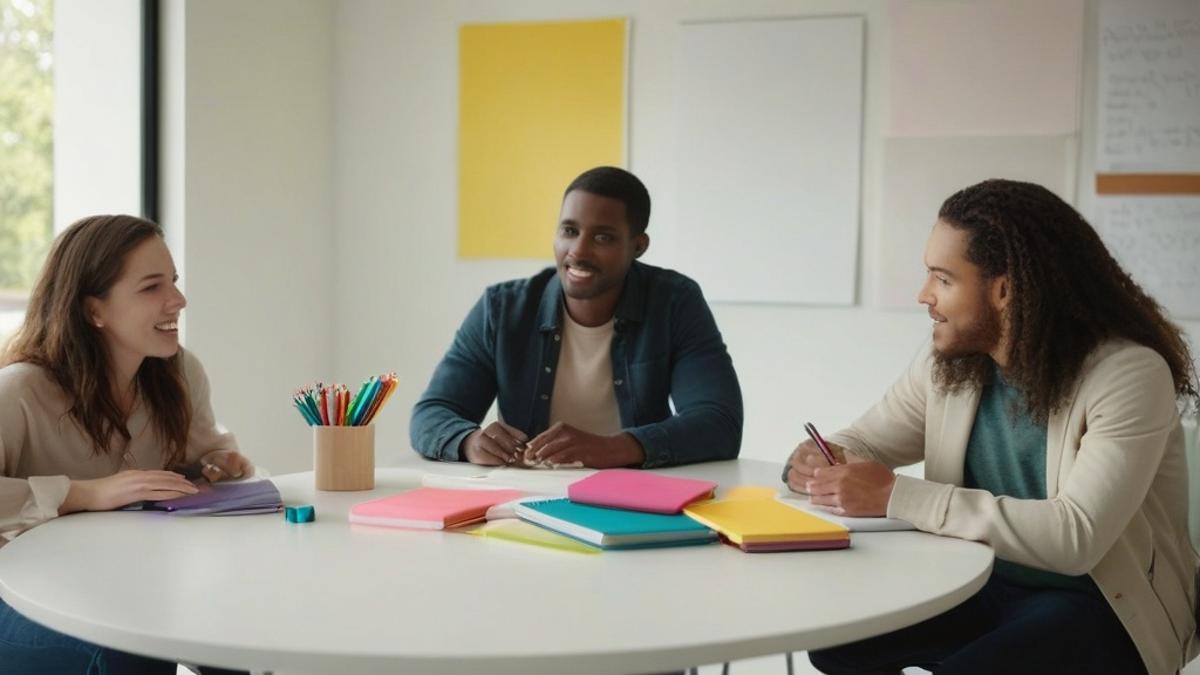
This layered approach keeps energy levels high while accommodating different comfort levels with public speaking and risk-taking.## Project-Based Learning: Where Theory Meets RealityProject-based learning (PBL) has gained serious traction, particularly in STEM-focused schools across California and North Carolina. Rather than memorizing facts about ecosystems, students might design a water filtration system for a hypothetical drought scenario. The Buck Institute for Education reports that schools implementing PBL see measurable gains in critical thinking scores alongside improved attendance rates.What makes PBL particularly effective for enhancing classroom interaction is its natural accommodation of diverse learning styles. Visual learners sketch diagrams, kinesthetic learners build prototypes, and verbal learners present findings—all within the same project framework.The common thread across these methods? Students aren’t passive recipients of information. They’re active participants constructing their own understanding, which research consistently links to deeper retention and genuine enthusiasm for learning.
DIVE DEEPER: Click here to learn more
# Digital Tools and Resources That Sustain MomentumWalk through the halls of a suburban Denver high school today, and the technology gap between generations becomes obvious fast. Students who’ve grown up with smartphones in their pockets expect learning environments that match the interactivity they experience everywhere else. This is where effective learning resources earn their keep.Platforms like Kahoot, Nearpod, and Quizizz have transformed simple review sessions into competitive, game-like experiences. A 2022 survey from EdTech Magazine found that 89% of teachers using gamified quiz platforms reported noticeably higher participation rates compared to traditional worksheet reviews. The instant feedback loop—seeing your score climb in real time—taps into something lecture slides simply cannot replicate.## Adaptive Learning Software Fills the GapsBeyond gamification, adaptive learning platforms like DreamBox and IXL adjust difficulty based on individual student performance. A seventh-grader struggling with fractions in a Phoenix classroom receives different practice problems than the classmate three seats over who’s already mastered the concept.This personalization matters enormously for maximizing student participation among learners who might otherwise disengage out of frustration or boredom. Schools implementing these tools have documented measurable improvements, including:
- Reduced dropout rates in credit-recovery programs
- Higher completion percentages for assigned practice sets
- Faster identification of learning gaps before standardized testing
- Increased time-on-task during independent work periods
## Podcasts, Videos, and the Rise of Micro-ContentNot every effective resource requires a subscription fee or district-wide software license. Teachers across Chicago and Atlanta have started curating short-form educational videos—often five minutes or less—to introduce complex topics before diving into discussion.This “flipped classroom” approach, where students absorb foundational content at home and apply it during class time, frees up valuable instructional minutes for the interactive work that actually drives comprehension. Khan Academy and CrashCourse videos frequently serve this exact purpose.## Building a Resource Ecosystem, Not a Single SolutionThe most successful student engagement strategies rarely rely on one tool alone. Instead, savvy educators blend digital platforms with analog techniques—a Kahoot quiz might open class, followed by a paper-based collaborative worksheet, then a quick video clip to reinforce key vocabulary.This variety prevents the novelty fatigue that can set in when any single method, however impressive initially, becomes routine. Students notice when learning feels stagnant, and engagement drops accordingly.What separates schools seeing genuine results from those merely checking a technology box often comes down to intentionality. Teachers who select resources based on specific learning objectives—rather than adopting tools simply because they’re trending—tend to see stronger, more consistent gains in both participation and retention.
Bringing It All Together: The Future of Classroom Engagement
From gamified quizzes in Denver classrooms to adaptive software adjusting in real time for a struggling seventh-grader in Phoenix, one truth emerges clearly: there’s no single silver bullet. Effective student engagement techniques work best as a coordinated system rather than isolated experiments.
Throughout this discussion, a pattern surfaces repeatedly. Schools that succeed treat technology as a complement to strong pedagogy, not a replacement for it. The 89% participation boost tied to gamified platforms only means something when paired with intentional teaching decisions about when and why to deploy them.
What Educators Should Take Away
For teachers looking to maximize student participation, the path forward involves three practical priorities:
- Diversify delivery methods to prevent novelty fatigue from setting in
- Match tools to objectives instead of chasing trending apps
- Monitor real data, like completion rates and time-on-task, to confirm what’s actually working
These active learning strategies aren’t theoretical. They’re already reshaping classrooms in Chicago, Atlanta, and beyond, where flipped-classroom models and adaptive platforms are producing measurable gains in retention and reduced dropout rates.
Looking ahead, the districts making the most progress won’t necessarily be the ones with the biggest technology budgets. They’ll be the ones asking harder questions about student behavior, learning gaps, and classroom dynamics before selecting any resource.
Enhancing classroom interaction ultimately comes down to listening—watching where students lean in and where they check out, then adjusting accordingly. The tools discussed here offer proven starting points, but sustained engagement will always depend on educators willing to experiment, measure results, and refine their approach as classrooms and student needs continue evolving.
Frequently Asked Questions
What are some effective student engagement techniques for remote learning environments?
Effective student engagement techniques for remote learning include incorporating interactive tools like polls and quizzes, fostering a sense of community through group projects, and using breakout rooms for discussions. Regularly seeking student feedback can also help modify approaches to better fit learners’ needs.
How can teachers integrate technology to enhance student engagement techniques?
Teachers can integrate technology by using educational apps that promote gamification, such as Kahoot or Quizlet, to make learning more interactive. Utilizing video conferencing tools for real-time question and answer sessions can also enhance participation and engagement.
What role does student choice play in student engagement techniques?
Student choice plays a crucial role in engagement by allowing learners to pursue topics of personal interest and select methods of assessment that reflect their strengths. This autonomy increases motivation and investment in their own learning process.
How can collaborative learning improve student engagement in the classroom?
Collaborative learning improves student engagement by promoting teamwork and communication skills, making learning a shared experience. Group activities encourage students to engage with different perspectives, fostering a deeper understanding of the subject matter.
What assessment strategies can enhance student engagement techniques?
Assessment strategies that can enhance student engagement include formative assessments like peer reviews and self-assessments, which encourage reflection and active participation. Implementing project-based assessments allows students to apply their knowledge creatively and effectively.